
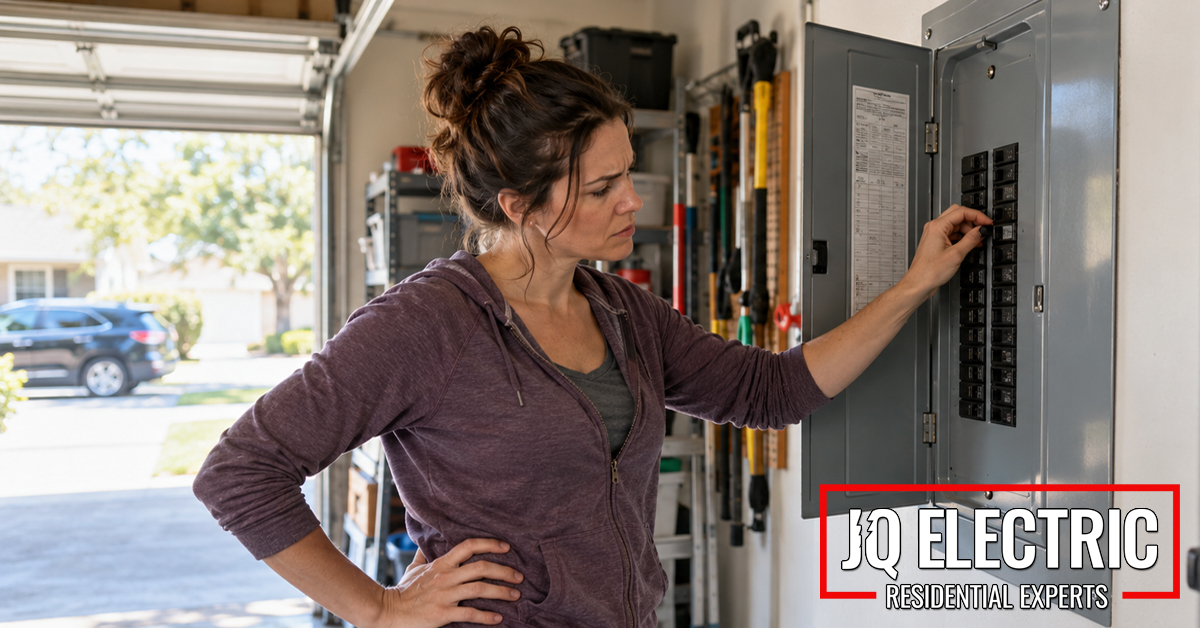
An Overloaded Breaker Box can threaten your home’s safety, reliability, and ability to support modern electrical demands. Because the panel works quietly, trouble may develop before a complete failure occurs. Fortunately, many panels provide warning signs that homeowners can recognize without opening the equipment.
What Your Electrical Panel Does
Your electrical panel receives utility power and divides it among separate household circuits. Each breaker monitors one circuit and interrupts power when current becomes unsafe. This action helps protect wiring from overheating inside your walls.
As a result, the panel serves as the control center for your electrical system. A dependable panel supports everyday appliances while responding quickly to dangerous conditions.
How an Aging Panel Affects Safety
Electrical panels do not last forever. Internal parts can loosen, corrode, weaken, or wear after years of regular use. Older panels may also lack enough spaces for modern circuits.
Meanwhile, families now use more appliances, electronics, chargers, and comfort systems. An aging panel may struggle with those demands, even if it once worked properly.
Age alone does not prove danger. However, older equipment combined with warning signs deserves professional attention.
Frequent Breaker Trips
Breakers should trip when a circuit becomes overloaded or develops a fault. One occasional trip may have a simple explanation. Repeated trips during normal household use suggest an unresolved problem.
For example, a microwave and air fryer may overwhelm a shared kitchen circuit. A space heater can create similar trouble elsewhere.
Frequent trips across several circuits may indicate an Overloaded Breaker Box. Never keep resetting breakers without identifying the cause.
Breakers That Will Not Reset
A breaker should reset after the underlying problem disappears. Sometimes it trips again immediately or refuses to stay on.
That response may indicate a short circuit, ground fault, damaged appliance, or failing breaker. First, unplug devices connected to the affected circuit.
Then, leave the breaker off if it still will not reset. Forcing it repeatedly can worsen damage and increase risk.
Sounds, Odors, and Heat
A healthy electrical panel should operate quietly. Buzzing, humming, popping, or crackling sounds may indicate loose connections, arcing, or failing breakers.
Likewise, a burning odor near the panel requires immediate attention. Overheated insulation or melting components may smell like hot plastic.
Noticeable warmth around the panel cover or nearby wall is also concerning. Excess current and loose connections can create dangerous temperatures.
Do not remove the cover to search for the source. Contact JQ Electric immediately.
Smoke, visible sparks, or active fire require emergency services. Leave the home and call 911 from a safe location.
Rust, Moisture, and Visible Damage
Water and electrical equipment create a dangerous combination. Leaks, condensation, flooding, or humidity can damage internal components.
Look for rust, corrosion, moisture, or water stains around the closed panel. Even old stains may reveal earlier exposure.
Scorch marks, melted plastic, or discoloration indicate overheating or electrical arcing. These signs require immediate professional evaluation.
Avoid touching a damp panel or standing water nearby. Instead, contact an electrician and address the moisture source.
Flickering Lights and Appliance Problems
Lights may dim briefly when a large appliance starts. However, repeated flickering across several rooms may signal panel or service problems.
Lights that regularly brighten and dim can indicate unstable voltage. A loose neutral connection is one possible cause.
Appliances may also lose power when another appliance starts. For instance, a television might reset when the air conditioner turns on.
These symptoms can reflect overloaded circuits, voltage drops, or insufficient capacity. Frequent interruptions may damage sensitive electronics and appliance controls.
Modern Electrical Demands Add Up
Modern homes contain large refrigerators, computers, smart devices, powerful kitchen equipment, and advanced HVAC systems. Many families also add electric vehicle chargers.
Each improvement increases electrical demand. An Overloaded Breaker Box may become obvious when several major devices run together.
Older homes often have fewer circuits because builders planned for fewer devices. Several rooms may share one circuit, while kitchens lack dedicated appliance circuits.
Adding power strips does not increase capacity. Your home may need dedicated circuits, additional panel space, or upgraded service.
Loose Connections Inside the Panel
Electrical connections expand and contract as current flows and temperatures change. Over time, some connections may loosen.
Loose connections create resistance, and resistance creates heat. They can also cause flickering, buzzing, arcing, and unstable voltage.
Only a licensed electrician should inspect internal connections. Dangerous voltage may remain present, even when certain breakers are switched off.
Breaker Replacement or Panel Upgrade
Replacing one faulty breaker may solve an isolated problem. That repair works when the panel remains safe, compatible, and properly sized.
A panel upgrade addresses broader concerns involving capacity, condition, or available circuit space. It can also prepare your home for future equipment.
EV chargers, updated HVAC systems, and electric kitchen appliances can require substantial power. As a result, these additions may expose limitations in older service.
Some homes operate safely on 100-amp service. Others need more capacity because their equipment and usage create greater demand.
A licensed electrician can perform a load calculation. That evaluation determines whether replacement, new circuits, or a service upgrade makes sense.
Never Remove the Panel Cover
The cover separates you from energized components. Removing it can expose wiring that can cause severe shock or burns.
Turning off the main breaker does not eliminate every hazard. Utility power may still reach parts of the panel.
Therefore, limit homeowner checks to the closed exterior. Leave testing, tightening, replacement, and internal inspection to a qualified electrician.
When to Call JQ Electric
Call JQ Electric immediately for burning odors, smoke, sparks, crackling sounds, or visible heat damage. Breakers that refuse to reset also require prompt attention.
Additionally, schedule an inspection for frequent trips, unstable lighting, unexplained appliance failures, rust, or water stains. Professional testing can identify hidden problems before they become emergencies.
Owner John Quesenberry lives in Crofton and remains active throughout the community. He raises his family locally and volunteers with area sports programs.
That local connection supports responsive service and straightforward communication.
Protect Your Home with Professional Service
An Overloaded Breaker Box rarely improves without addressing the underlying demand or damage. Early attention can prevent larger failures and expensive repairs.
JQ Electric can replace breakers, add dedicated circuits, and complete panel upgrades. The company also installs EV chargers, ceiling fans, attic exhaust fans, interior lighting, security lighting, and exterior lighting.
Whether you need troubleshooting or a planned improvement, proper electrical work protects your home. Contact JQ Electric when your panel shows warning signs.

